Classic Film Noir exposes the myths by which we fulfil our desires and lays flat the means by which we created the audiovisual dispositif — sex — murder — and the suburban dream — 1940 to 1960 — FEATURING: amnesia, paranoid women, lousy husbands, red scare and HUAC, boxing, drifter narratives, crooked cops, home invasion noir, docu-style noir, returning veterans, #KEFAUVER! cowboy noir, vacuum cleaners in film noir, outré noir, espionage noir — and more.
Margin for Error (1943)
Daisy Kenyon (1947)
Preminger’s sensibility clashed with the shadows. His modus operandum, like a smoke-filled room, ran counter to the polished veneer of society. Daisy Kenyon, a dame caught in the crossfire, danced on the edge of desire and danger.
The two leading men, a fedora and a military hat, did anybody write a book about the hat motif and codes and modes of symbology in noir. They had better had. Noir needs hat analysis. Hat analysis may be brought to bear in any and many a film noir, a good example we could enjoy might be Ramrod, starring Lana Turner.
Angel Face (1953)
Angel Face (1953) is a obsessive paranoid murder madness classic film noir from RKO Radio Pictures, the home of film noir, film noir central, as it should be known, and a late late entry from the great forgotten studio, and maybe one of the few from the Howard Hawks era that can be enjoyed for its full scale bizarre noir melodrama.
It's hard for some people to recover from the initial sight of Robert Mitchum in that apron. He is a lousy guy, yet hopefully not a lousy ambulance driver and medic. In the motor car noir aspect of Angel Face (1953) he is a bulk boy to be racing the elite cars so maybe ambulances are his thing.
He wants to race elite though and that is what happens. As a lousy boyfriend he is up there with the lying best of them. He doesn't mind a bit of the cheat and like any good heel does not spot the femme fatale with the offer of not just an apartment but more than that.
Laura (1944)
The premise of the story is that three men are fixated on the one woman, Laura Hunt, and as the story starts we visit one of those men — Waldo Lydecker, played by Clifton Webb — in the company of another of them, the young cop Mark McPherson, played by Dana Andrews.
The classic film noir flashback structure allows for a multitude of mystery and nonstandard storytelling, much of this confused by the fact that Waldo Lydecker is a brittle and caustic storyteller in himself — he is a famous columnist and aside from the power that he wields — typing his sometimes vitriolic and career-ending columns for his bathtub — he is in fact a weaver of tales himself and as such should not be trusted.
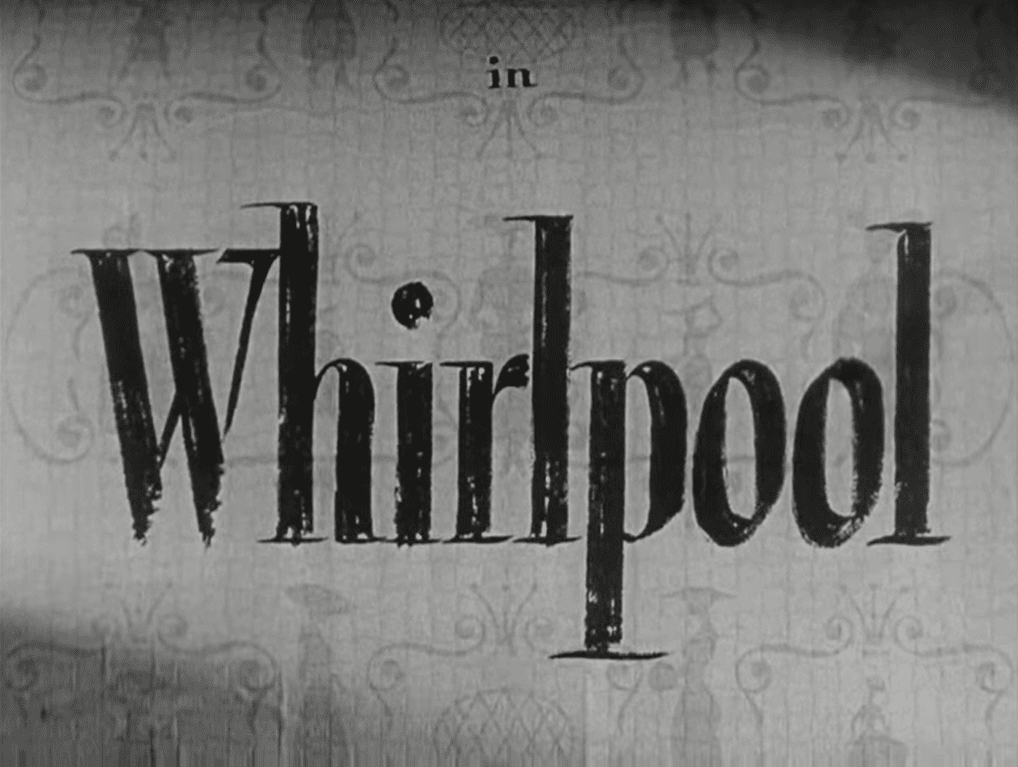
Whirlpool (1949)
It does however subject the woman to the role of a pawn in a game of power between two competing schools of theories and therapeutic techniques: psychoanalysis and hypnotism.
The film opens with a promising scene in which Gene Tierney, playing the wife of a super-eminent psychoanalysis, is caught stealing a valuable broach from a store.
Clearly she is able to afford the item she steals, as she lives a massively affluent lifestyle, and so the premise is strong.
However, as we shall see, viewers never get to the bottom of why Gene Tierney's character Ann behaves like this. She is quickly branded a kleptomaniac, and any decent modern film or novel would proceed along the lines of discovering what is at the root of this.
The Man With The Golden Arm (1955)
Frank Sinatra memorably plays the lead in Otto Preminger's adaptation of Nelson Algren's novel, with Kim Novak supplying a sympathetic role beside him, his light indeed in the dark city of film noir, which admittedly is not so very dark here — at least in tone.
Frank Sinatra plays Frankie Machine, an illegal card dealer and recovering heroin addict who gets out of prison, with a new talent — he's learned the drums.
On the streets and looking for a jazz band gig, Frankie Machine is inevitably sucked back into the life, encountering all the perils of the familiar noir city — from shady businessmen to vulnerable women, via small-time con men to temptation itself.
Fallen Angel (1945)
With these words a sassy ass bus driver drops off the world’s next noir victim on the outskirts of Walton, and in the middle of the night.
It’s Fallen Angel, a film noir starring Alice Faye, Dana Andrews and Linda Darnell, director Otto Preminger.
Stuck in Walton, 150 miles short of his destination, our anti-hero Dana Andrews wanders into the local diner, where the locals are up to a decent amount of skulduggery, worried about a missing girl called Stella.
It isn’t long before the said floozy breezes in, her legs at a dangerous angle.
She swipes the hero’s hamburger and he exits to wander the streets alone.
Where the Sidewalk Ends (1950)
Where the sidewalk ends, you’re on your own, making your own moral choices, with no guidance other than your past, and your own spur of the moment errors — your own dry, cold and helpless anger, your vendettas.
In this devilish and dangerous land, film noir lives and breathes — and Where the Sidewalk Ends (1950) is an epic film noir, one of the greats. It's a film that drives the cynicism home, before kicking it to death in the garage.
Directed by Otto Preminger and starring Dana Andrews, Gene Tierney and Gary Merrill.
.png)
.png)
.png)
.png)

.png)