Classic Film Noir exposes the myths by which we fulfil our desires and lays flat the means by which we created the audiovisual dispositif — sex — murder — and the suburban dream — 1940 to 1960 — FEATURING: amnesia, paranoid women, lousy husbands, red scare and HUAC, boxing, drifter narratives, crooked cops, home invasion noir, docu-style noir, returning veterans, #KEFAUVER! cowboy noir, vacuum cleaners in film noir, outré noir, espionage noir — and more.
A Man Alone (1955)
Silver Lode (1954)
The Gunfighter (1950)
In the noirlands of the wild west and in the imaginations of the film makers and narrative makers of the high era of American creativity, a film such as The Gunfighter (1950) carries many a surprise.
Dust Be My Destiny (1939)
Dust Be My Destiny (1939) is beautifully staged expression of what America sought most for itself, the idea of what it was set to become, its deepest anxieties about morality expressed in individual and romantic action from John Garfield, largely.
The Killer Is Loose (1956)
The Killer Is Loose (1956) is a film noir thriller with modern echoes, although the 1950s had already seen the death of modernism. We may well come back to that.
Yet the cinema has to be the ultimate of all modern artforms. The modern period, insofar as it relates to art, literature and most importantly of all, politics, can really be said to take place between 1880 and 1950.
It is curiously enough during this period also that cinema rises, develops, achieves its potential, and then enters the same decline as all else in post modern period.
The Underworld Story (1950)
The Underworld Story (1950) is a journalism and media murder family intrigue race relations noir starring Dan Duryea, and directed by Cy Endfield.
Also starring Herbert Marshall, Gale Storm, Howard Da Silva and Michael O'Shea with Da Silva playing the loud-mouthed gangster Carl Durham, one of his last roles before becoming blacklisted.
The newspaperman played by Duryea in The Underworld Story is similar in attitude to that played by Kirk Douglas in Billy Wilder's Ace in the Hole (1951) — a reporter that does anything for publicity for himself regardless of ethics.
The Underworld Story is a strange name for a film that is largely about newspaper ethics, and which features little about the underworld, which albeit forms an occasional backdrop for the action.
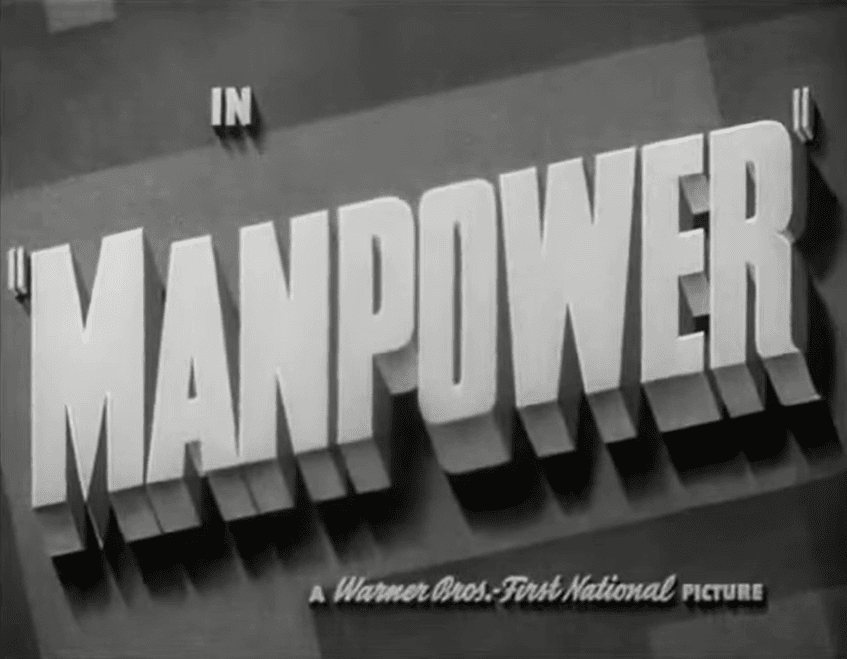
Manpower (1941)
While likely classifiable as a dramatic film with comic elements, Manpower still has something to relate to noir audiences.
The story is about two friends and their supportive relationship, and essentially portrays the bonds between working men and their women.
The slapstick jollity of the era is well captured and has certainly, as comedy usually does, aged poorly. Edward G. Robinson's character in hospital is styled as an 'octopus' because of the way his hands grab the nurses. And this is the least of it.
They Drive By Night (1940)
The rub is that director Raoul Walsh had a flair for
subverting genres, and really only made what you might call “Raoul Walsh
pictures” whatever the basic genre ― and
this one is about as Raoul Walsh as you can get.
It’s a trucker movie, it’s a comedy, it’s a romance and it’s
a thriller. It’s a picture about class relationships and the cutthroat nature
of business; and it’s a picture about madness and the little guy rising to the
top.
Raoul Walsh ― who also made the following film noir favourites ― High Sierra (1941); Pursued (1947); and White Heat (1949) ― had a feeling feeling for regular people, informal surroundings, and he portrays the hustle and bustle of working life very well.
.png)
.png)
.png)
.png)
.png)

.png)