Showing posts with label John Garfield. Show all posts

Body and Soul (1947)

Body and Soul (1947) is a Robert Rossen directed classic film noir Citizen Kane of all boxing movies flashback and occasionally De Niro sounding voiceover violence and corruption portraits in noir family and friendship melodrama of doom and lucre classic boxing and anti-boxing civil rights James Wong Howe shot boxing clever solid punch clawing your way to the top boxing film noir starring John Garfield, Lilli Palmer, Hazel Brooks, Anne Revere, William Conrad, Joseph Pevney, Lloyd Gough, Canada Lee and Art Smith.

The Sea Wolf (1941)

The Sea Wolf (1941) is a nautical noir ghost ship of shame and cruelty dramatic abduction and high seas wrecking crew medical and maritime madness Jack London adapted tale of intersecting American narratives combining the frontier of the sea with the oldest narrative tropes known to the continent, including the olden mania of the rogue seamaster and the anti-Nietzschean struggle for the victory of normalcy over ubermenshcary.

Michael Curtiz's 1941 adaptation of Jack London’s The Sea Wolf occupies a peculiar intersection of seafaring adventure, psychological realism, and the film noir sensibility emerging in Hollywood during the wartime period. 

The Fallen Sparrow (1943)

The Fallen Sparrow (1943)
is a dense anti-Nazi World War 2 returning veteran film noir of paranoia, trauma, and espionage, with John Garfield as a Spanish Civil War veteran in possession of a priceless keepsake, who returns home to find out who murdered his friend. It received an Oscar nomination for Best Scoring of a Dramatic or Comedy Picture.

The Fallen Sparrow (1943) directed by Richard Wallace is a convoluted, politically charged spy thriller steeped in noir sensibilities. Starring John Garfield as the psychologically fractured Kit McKittrick and Maureen O’Hara as the enigmatic Toni Donne, the film operates within a framework of paranoia and trauma. 

Dust Be My Destiny (1939)

Dust Be My Destiny (1939) is an innocent-man-jailed moral drifter narrative prison farm social state of the US couple on the run drama and romance proto noir which expresses noir moments and captures noir sentiment, as it bums across the states in various wagons and train carriages, always expressive of the idea that love will out.

Dust Be My Destiny (1939) is beautifully staged expression of what America sought most for itself, the idea of what it was set to become, its deepest anxieties about morality expressed in individual and romantic action from John Garfield, largely.

Jigsaw (1949)

Jigsaw (1949) is an unusual and at times outré mystery chase hate-group propaganda versus journalism, journalism and media film noir, starring Franchot Tone as a detecting assistant district attorney, on the scene and hunting for what might be called neo-fascists, or perhaps simply more likely, just fascists.

None of that was really truly departed for the future, after all, not even by 1949. And what is and was and what became and what now is fascism, and what the definitions of fascism are and might be, are all questions much relevant to film noir.

Jigsaw (1949) is an entertaining thriller that’s so over-the-top, you can’t help but overlook its far-fetched plot and be grateful for the fun it brings. It’s a film that’s as strange as they come.

He Ran All The Way (1951)

He Ran All The Way (1951) is a John Garfield classic home invasion disillusioned post-war young man turns-to-crime parental nightmare indolent rebel film noir, from the high era of the indolent rebellious criminal youth turns to crime movie style. 

In the murky depths of 1950s Tinseltown, where secrets slither in the shadows and peril prowls at every turn, He Ran All the Way emerges as a gritty yarn of deceit and treachery. 

Directed by the mysterious John Berry and starring the dynamic duo of John Garfield and Shelley Winters, this noir gem plunges audiences into the seamy world of youth in trouble with the law in the doom male post-war era of male doom and desire as doomed males turned to home invading robbery and anarchy, only to satisfy that world-ending craving they have for they know what, only in the movies, and only ever in film noir.

Nobody Lives Forever (1946)

Nobody Lives Forever (1946) is a returning veteran swindler confidence-man romance drama film noir which like many prime examples of the style from the 1940s discusses the impossibility of going straight and escaping one's past in post-WWII American society that is noir as hell and a constant fateful threat, never to be reconciled with the American Dream.

Nick Blake (played by John Garfield) is a charming and roguish ex-con artist who has just been released from prison. He decides to go straight and live an honest life. However, he is approached by his former partner-in-crime, Doc, with an opportunity for a lucrative con job. The target is a wealthy widow, Gladys Halvorsen (played by Geraldine Fitzgerald), who is seeking companionship and may be susceptible to Nick's charms.

Nick reluctantly agrees to participate in the scheme, but as he spends more time with Gladys, he begins to genuinely fall for her. The two develop a romantic connection, complicating Nick's plans to deceive her. As the con unfolds, Nick faces internal conflicts between his desire for a new, honest life and the pressures of his criminal past.

Castle on The Hudson (1940)

Castle on the Hudson (1940) is an early classic film noir high drama morality-guided prison movie with several differences. 

Hubris-powered hood John Garfield has ambitions to be The King of New York. 

He's young and good-looking, and filled with the kind of confidence that was popularised by the full-on gangsters of the 1930s.

He owns the night clubs and he owns the streets and he's just the sort of hero we have seen emerging over the last decade, out of the pre-Code era and into the fully coded sort of productions as Castle on the Hudson represents.

Working his way up from the streets, the hoods and mobsters of the 1940s were a special kind of gift to the world. American cinema offered more than a taste of evil, but a full on immersion into the lifestyles of the rich and criminally infamous.

The Breaking Point (1950)

The Breaking Point (1950) is a swell of a smart film noir drama that falls sweetly across the boundary between 1040s and 1950s cinema.

The movie stars John Garfield, who plays the otherwise moral captain of a charter boat who becomes financially strapped and is drawn into illegal activities in order to keep up payments on his boat.

Across the varieties of film noir, there are many flavours, and this includes the tragic drama that has elements of film noir, as here in The Breaking Point.

Although not complex, the story is interesting because of the realism brought to the characters, an exchange made in favour of dropping the more familiar and fantastical elements of film noir.

One of the most common themes and juxtapositions in film noir, is made between domestic life and the life of crime, or at least the life 'out there' in the city of danger.

The Postman Always Rings Twice (1946)

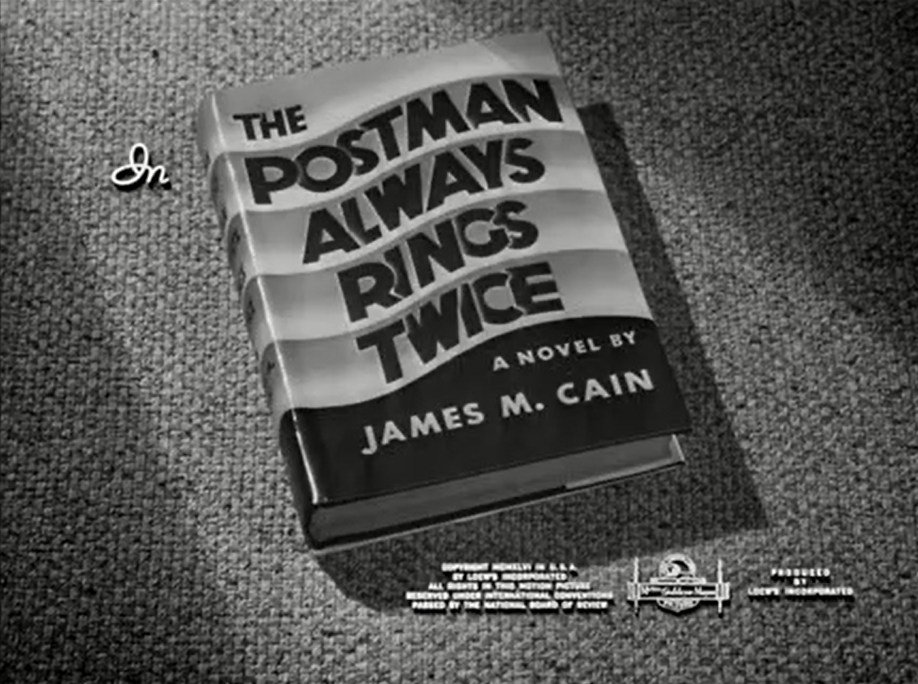
The Postman Always Rings Twice (1946) is classic style film noir murder femme fatale courtroom death row take-out diner of doom powered by lust, fatality and fortune, played out to the death as a classic film noir must do.

In terms of film noir street cred, it packs a bagful. Considered too immoral to be filmed for many a year, with its themes of adultery and murder, The Postman Always Rings Twice was hastened into production after the success of the film Double Indemnity (1944), which was also adapted from a novel by James M. Cain.

The real themes of the movie are sexual dynamics however, and the tension between the man as drifter, working his way across the land with no particular goal or ambition, and the woman as the more rooted character, seeking to set up home. This is not just a tension played out in the sexual relationship, but in the society as a whole, with drifters being increasingly considered an anti-social element.

Out of the Fog (1941)


On the Brooklyn shore, there’s a mess of fog, and in that fog is a deep-seated and sordid corruption, seeping into the failing hearts of the innocent.

Down in this gutter, we find the broke, a bunch of hard working guys that are just trying to scrape together enough bits to secure their next fishing trip to the bay.

Out of The Fog (1941), starring Ida Lupino, is a moody yarn about a racketeer and his gormless marks, which features abundant fog and plenty of dark and moody water lapping sound effects.

Within and around this wafts John Garfield, who steps in an tries his hand at Bogart — or is it Cagney?

Hard to say.

Of course Bogart does Bogart best, and the same is to be said of James Cagney, but there’s a ton of film-flam holding John Garfield back in Out of the Fog, and try as he may, he just can’t see his way out of it.

Force of Evil (1948)

Force of Evil (1948)
is a classic New York numbers racket conflicted brothers pre-HUAC and voiced-over film noir with many biblical allusions (Cain and Abel, Judas's betrayal, stigmata) which pits a rising Wall Street lawyer against the modernising principles of post-war capitalism and the fascinating blue-collar practise of playing the numbers game.

Film noir is darkness, film noir is crime and film noir is human folly . . . writ large and personal, as a force of evil.  Film noir renders a cinema of weakness, deceit, lust-inspired crime, greed and mid-century urban survival.  

In the film noir city disasters are acted out in bars, cars and street corners, or in cheerless apartments, suggestive of a kind of homelessness.