Showing posts with label Hypnotism. Show all posts

The Man Who Knew Too Much (1934)

The Man Who Knew Too Much (1934) is an Alfred Hitchcock British-period thriller proto-noir proto-Hitchcock proto-innocent person swept up in intrigue psychological and action exciter.

In his contemporary review of The Man Who Knew Too Much (1934), Forsyth Hardy noted the absence of expressive use of sound, especially when compared to earlier Hitchcock works like Murder! or Blackmail. However, while the film lacks overt or showy sound techniques, it marks a significant evolution in Hitchcock’s handling of sound. 

The Woman in White (1948)

The Woman in White (1948) is a historical film noir melodrama gothic Victoriana novel adaptation of the Wilkie Collins classic hypnotism ghostly creeper tale, offering up Gig Young, Sydney Greenstreet, Agnes Moorhead and no mouse inside of Count Fosco's waistcoat, much of a missing misery that was for us.

The comforting narrative of women in captivity, makes the writing so much clearer. There is noir sensibility, and feminist undercurrents, barely squeaking beneath the weight of the production, and adaptation as a moribund style of movie.

Bewitched (1945)

Bewitched (1945) is a paranoid woman psychological voice-in-her-head voiceover flashback assumed identity psychological terror supernatural schizophrenic medical insane woman fleeing marriage hypnotism flashback and voice over film noir from the dark height of the golden age of the silver screen's era.

The term classic film noir does doubtless evoke as it is intended to do, a series of high powered and famous high stakes noir dramas from the period, usually of eminent structure and production, and preserved by film registries and their buffs, citing such names as Double Indemnity and the rest of the well-trod shuffle of the mighty, while 1945 alone boasts the classics of Detour (1845), Scarlet Street (1945), Mildred Pierce (1945), and The Lost Weekend (1945), yes it's the year that film noir won Best Picture, Best Director, Best Actor and Best Adapted Screenplay at the Academy Awards.

Black Magic (1949)

Black Magic (1949) is an historical Orson Welles film noir hypnosis ham and history fest of magical and wildly entertaining crowd and close up, sumptuous set piece dark and magical fun-based frolics of the late forties, with some Dumas-based class projections as the piece adopts the narrative of the novel of the same by Alexander Pere.

For oddity and oddity alone the first scene of this spectacular cast of hundreds of extras spectacular festacular magicianical historical Francophile tale of society ambition and absolute Welles-ian pride of personality leading to a hubris-driven fall, has for no apparent reason other than the whimsie or the dandification of the reels, an entretemps between Dumas Snr played with bold waggery by Berry Kroeger, and Dumas Jnr, played with gentle ungruffery by the normally gruffed up Raymond Burr.

Nightmare (1956)

Nightmare (1956) is a tortured male lead psychological thriller mystery film noir directed by Maxwell Shane and starring Edward G. Robinson, Kevin McCarthy and Connie Russell.

It's such a mystery indeed to relate how a man can dream a nightmare and find a key and wash blood off his hands and not know what he has done, such a mystery that the story is told twice in the great film noir era because this same story was told in the film Fear In The Night (1943), also a great example of the style and its obsessions.

Essentially Nightmare (1956) is a tale of paranoia, murder and psychology, making of it noir mania in a deluxe package. Cracking weird action drives our hero played by Kevin McCarthy, doing a bit of what he was to later perfect in Invasion Of The Body Snatchers. 

Sleep, My Love (1948)

Sleep, My Love (1948) is a mid-period amnesia husband wife-murder noir based on a story by the great Leo Rosten.

As the story of a paranoid woman being drugged, hypnotised and gaslit into madness, Sleep, My Love features a host of film noir tropes that were hot in the 1940s.

The star of the show and the subject of the drama is Alison Courtland, a wealthy New Yorker, who hasn't a clue how she ended up waking up screaming on a train bound for Boston. When she phones her husband, Richard, the police listen in and overhear that she had threatened him with a gun.

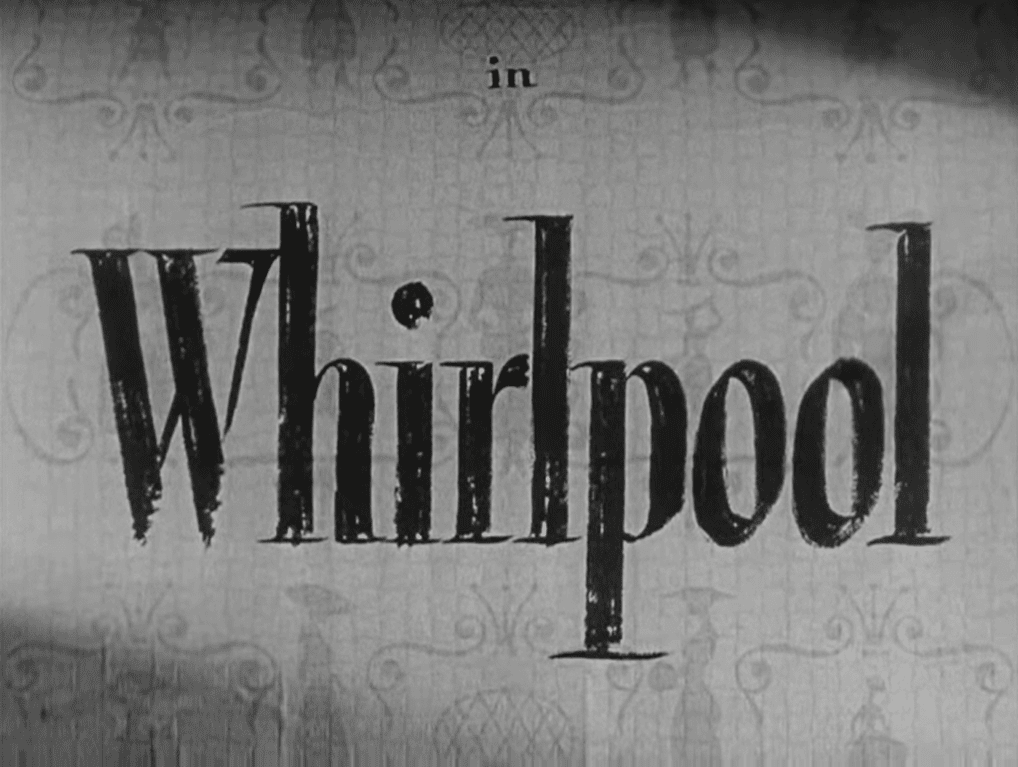
Whirlpool (1949)

Film noir Whirlpool (1950), starring Gene Tierney, Richard Conte and Jose Ferrer, is a masterful summation of some of noir's best tropes around the paranoid woman.

It does however subject the woman to the role of a pawn in a game of power between two competing schools of theories and therapeutic techniques: psychoanalysis and hypnotism.

The film opens with a promising scene in which Gene Tierney, playing the wife of a super-eminent psychoanalysis, is caught stealing a valuable broach from a store. 

Clearly she is able to afford the item she steals, as she lives a massively affluent lifestyle, and so the premise is strong.

However, as we shall see, viewers never get to the bottom of why Gene Tierney's character Ann behaves like this. She is quickly branded a kleptomaniac, and any decent modern film or novel would proceed along the lines of discovering what is at the root of this.